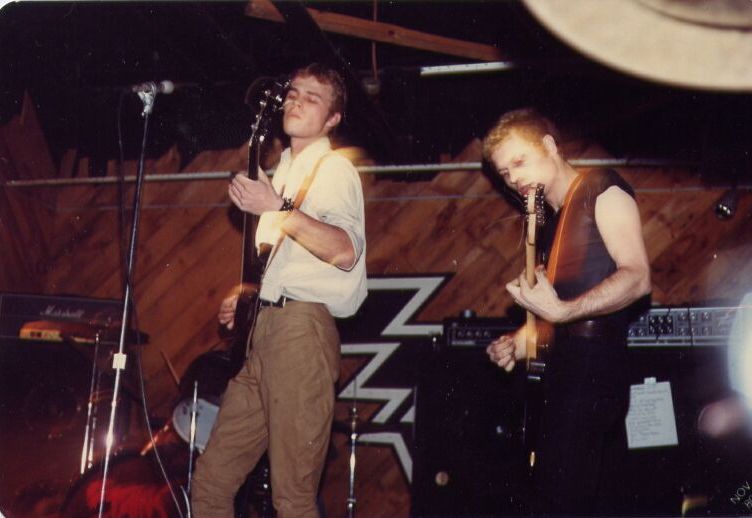
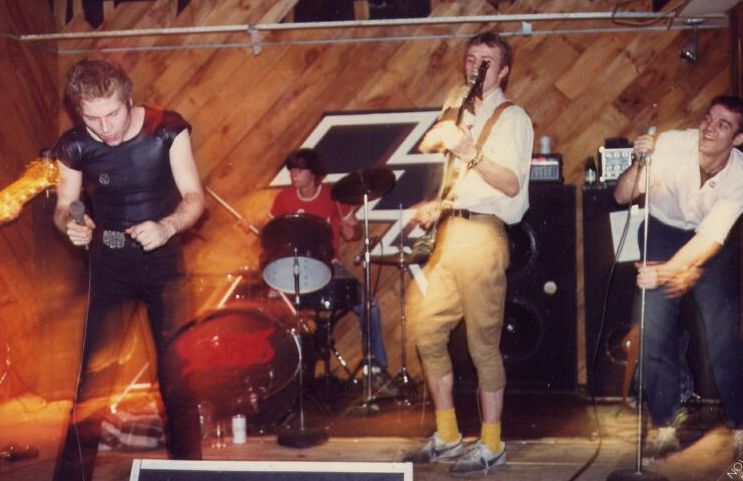
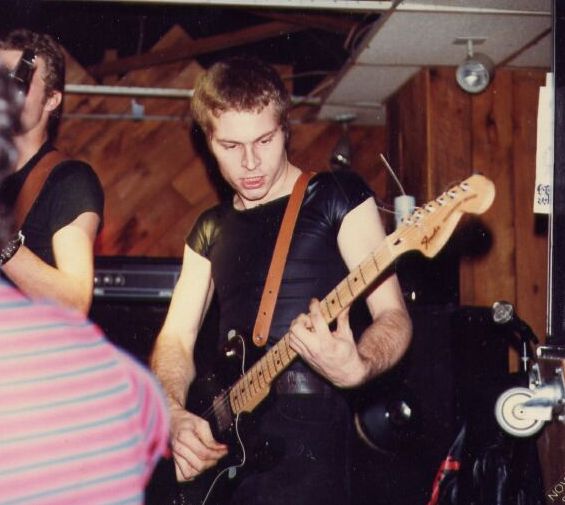
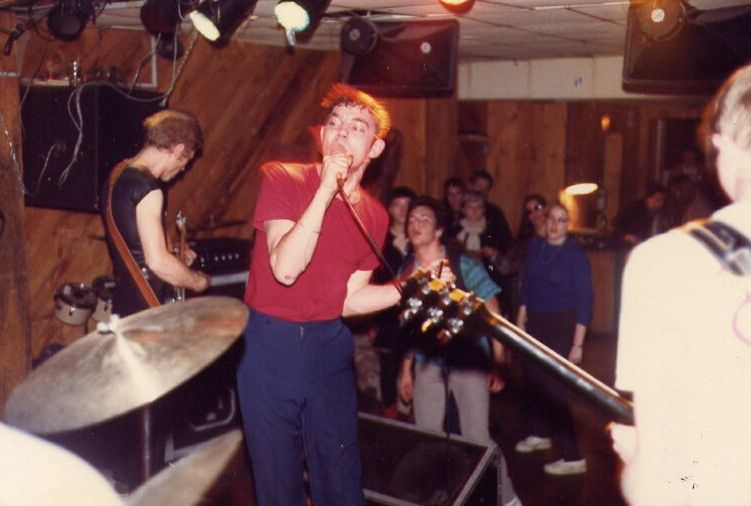
Portland, Maine punk before anyone needed a category for it.
George had seen the Sex Pistols in San Antonio in 1978 and returned to Portland determined to start a band. Dave Buxton arrived from Maidenhead, England, by way of Boston. They met in Portland, and by early 1979 The Stains had taken shape around Ripley, Buxton, Potter, Nulton and a changing cast of players.
The first show was memorably extreme: a performance of the Sex Pistols' “Submission” stretched out for roughly two hours. After that, the band began building its own material. The Downtown Lounge became a crucial home base. The Stains were rough, confrontational, funny, political and unpredictable — less interested in polish than in making something happen in the room.
The band released a 7-inch EP on Gutterworst Records: “Feel Guilty” and “Give Ireland Back To The Snakes” backed with “Sick Of Being Sick” and “Submission.” Lead guitarists who appeared with the group in the studio or onstage included Dave Morton, Steve Soma, Marc English, Gary Gogel and Roger Miller. A later Gutterworst LP gathered another fifteen recordings from 1979–1983.
By the early eighties The Stains were also part of the Boston post-punk orbit, sharing bills with American and British bands and nearly taking the 1981 Boston Battle of the Bands. They finally broke up in 1983. Ira Nulton went on to The Cliffs of Doneen; Ripley, Potter and original bassist Beth Blood moved forward into Ghost Walks.
“Slick? Nope. Totally tight? Nope. But every time it was a new experience, one well worth attending to.”Roger Miller • Mission of Burma
After The Stains
Ghost Walks
George Ripley, Joe Potter and Beth Blood regrouped after The Stains and pushed into garage rock, drones, jagged punk and stranger territory.
Ghost Walks carried the energy forward without simply repeating The Stains. The music could snap into lean punk, stretch into droning dirges, or veer toward impressionistic and surreal storytelling. It was a new band with some of the same people and the same appetite for making music that refused to sit politely in one box.
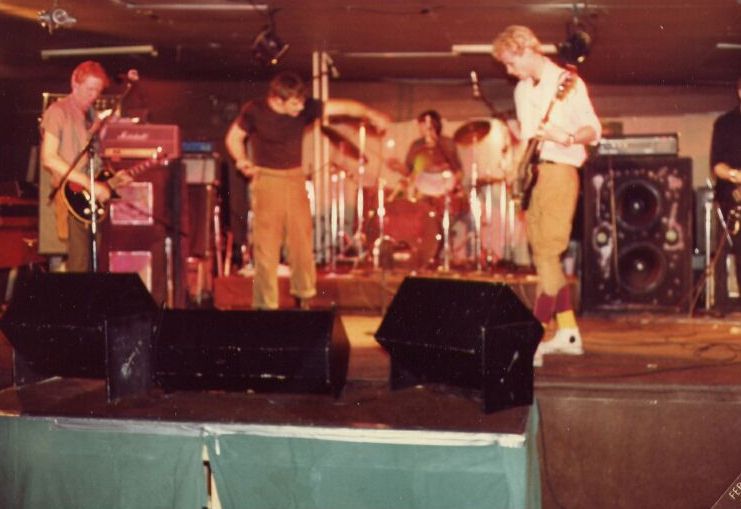
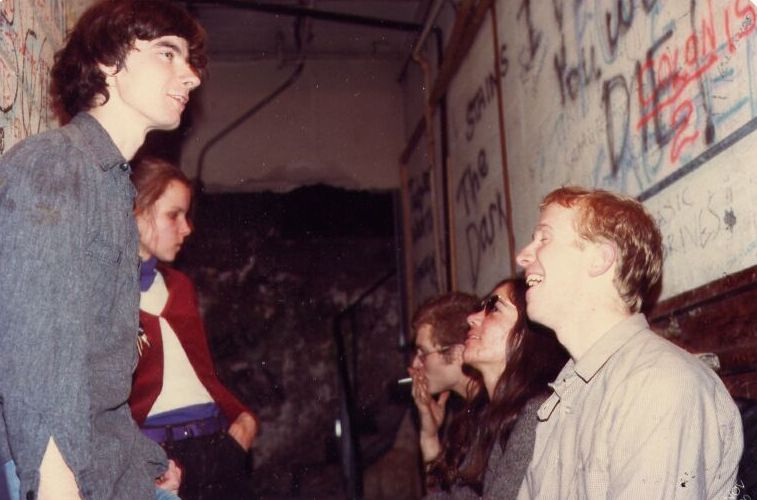
The surviving archive matters: photographs, flyers, ephemera and video give the band a life beyond a line in a discography. The original Ghost Walks gallery is preserved at Gutterworst Music, and a Ghost Walks video is available on YouTube.
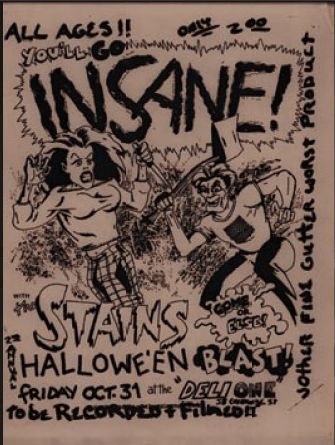
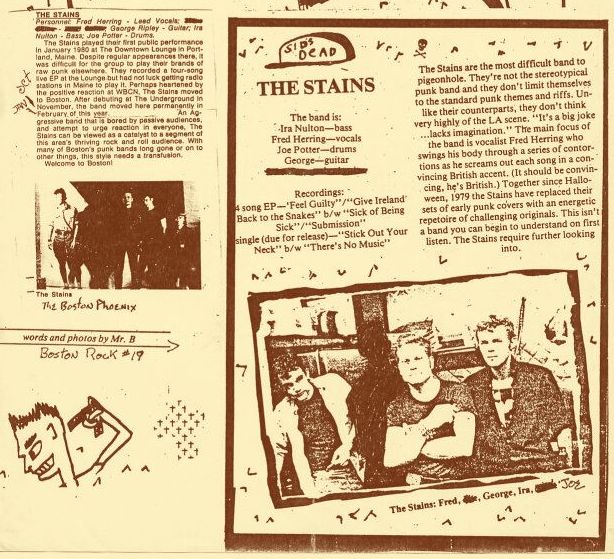
The handbills, club flyers and underground press that put The Stains on paper while the music was happening.
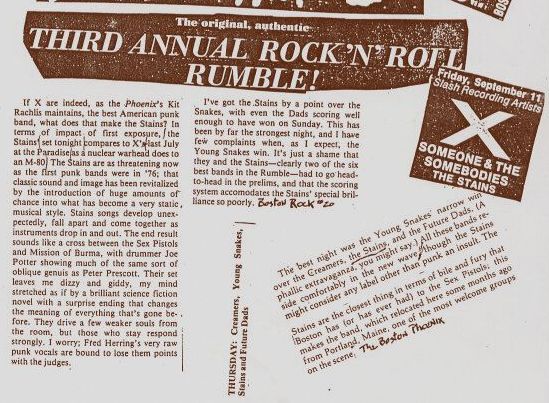
Halloween Blast Insane Productions flyer for The Stains at Deli One — Friday, October 31.Third Annual Rock ’n’ Roll Rumble Period clipping and show artwork from the Boston scene.Underground Press Contemporary write-ups on The Stains from the original archive.Argus / Trouser Press Early reviews of the Gutterworst EP, preserved as part of the paper trail.The Rumble Another surviving piece from the original George Ripley archive.
Roger Miller's liner notes are one of the best pieces of history attached to The Stains because they come from somebody who was there. Miller remembers George returning to Portland after seeing the Sex Pistols in Texas, Dave Buxton arriving from England, and the unlikely collision of people that became the band in 1979.
He recalls The Stains' absurdly long first “Submission,” the Downtown Lounge as their essential Portland room, and audiences willing to follow the band wherever it went. When The Stains moved into the Boston scene, Miller remembers them not as a slick machine but as a band whose instability was part of the attraction. Shows could be ragged, funny, ferocious and different every time.
“Slick? Nope. Totally tight? Nope. But every time it was a new experience, one well worth attending to.”
Miller also remembers the 1981 Boston Battle of the Bands, where The Stains shared the field with Band 19 and The Young Snakes, featuring a pre-'Til Tuesday Aimee Mann. His portrait of the band is wonderfully physical: Buxton careening around the stage, Ripley fixed on his guitar sound, Potter locked into the cymbals, and a succession of lead guitarists passing through without changing the band's essential character.
The notes put the politics in the music, too. For Miller, The Stains were a response to their time — punk as social commentary rather than fashion. When the group ended in 1983, the story split: Ira Nulton went to The Cliffs of Doneen, while Ripley and Potter rejoined Beth Blood in Ghost Walks. Miller hears the range in what they left behind: tight punk, drones, dirges, surrealism, and songs whose demand to be heard outlived the band.
His final point is the one that matters most: the recordings keep the music alive. “Wouldn't I Be Happy” isn't nostalgia; it still sounds like a demand.
The records that carried The Stains beyond Portland.
Sold out
NINETEEN EIGHTY LP / RUR #41
Rave Up Records' collection of the band's early recordings brings together material from the Downtown Lounge in Portland (April 2, 1980), Bonning House of Music in Scarborough (November 1980), and the second annual Halloween show at Deli 1 in Portland (October 31, 1980).
The label presented it as a definitive blast of crude, unruly American punk: the rare EP alongside previously unreleased studio and live material.
Archive
Hyped to Death #3
Part of the Hyped to Death series documenting North American independent punk from 1975–85. Volume 3 includes The Stains among a deep collection of underground bands from the period.
Original copies and reissues have moved in and out of availability over the years; treat marketplace listings as archival finds rather than permanent stock.